Home » Project Management » ERP Implementation Partner for Government Contractors
ERP Implementation Partner for Government Contractors
We provide the project governance and change management needed to bridge the gap between software vendors and your daily operations. We ensure your system configuration meets DCAA compliance requirements without disrupting the vital contract work your business depends on.
Schedule a Free Consultation
Trusted By
Your ERP Oversight Partner
ERP migration is often treated as a technical challenge, but it’s really an operational one. Your ERP touches finance, accounting, HR, purchasing, contracts, manufacturing, project management, reporting, and daily operations. Every department depends on it.
Most ERP projects stall because the human and process sides of the transition are overlooked. You need an oversight partner who manages the risk, the people, and the operational continuity to ensure your organization does not lose momentum.
Alluvionic's team of ERP professionals never disappoints. They bring in top-notch people every time, which is exactly why they've been my go-to partner for years.
John Infantolino, Principal at CohnReznick
The Oversight Difference
We Bridge the Gap Between Software and Operations
While your software partner handles the technical setup, we act as your representative. We coordinate the project, manage data migration, and lead testing to ensure the software is built for your business and ready to work on day one.
Ensuring Operational Readiness
We do not just plan for the software launch; we plan for your people. Our focus is ensuring your team is fully trained and the system works as intended the moment you go live. By managing user adoption, documentation, and hands-on testing, we prevent go-live panic and ensure your staff feels confident in their new workflows.
Our Platform Expertise
We support organizations across the ecosystems that power your business. While Costpoint is our primary focus for government contractors, our team is fluent in the tools that integrate with your ERP.
Deltek Costpoint
We specialize in managing the transition to Costpoint, ensuring it is set up to handle DCAA compliance, project accounting, and timekeeping.
Unanet
We support implementations for firms that require project-based ERP solutions, focusing on user adoption and process alignment.
OneStream
We provide oversight for your performance management and financial reporting implementations.
Jira & Project Tools
We integrate project-specific systems into your broader ERP ecosystem to maintain reporting accuracy and workflow continuity.
Our Core ERP Implementation Services
We structure our oversight approach around the critical pillars of ERP success. Explore our specialized services to see how we address your specific implementation risks:
ERP Implementation Project Management
Establish the governance, reporting, and risk management frameworks required to keep your transition on track.
ERP Change Management
Drive user adoption by preparing your people, managing resistance, and aligning leadership communication with operational realities.
ERP Data Migration Services
Ensure your data is clean, validated, and ready for your new environment to prevent long-term reporting issues or carrying over past mistakes.
ERP User Adoption & Training
Build confidence through clear work instructions, SME engagement, and hands-on training that empowers your team to use the system from day one.
Proven Results: Leonardo DRS
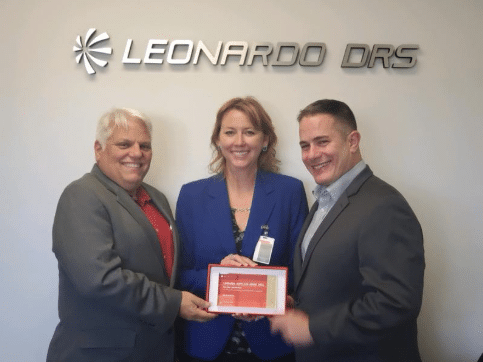
When Leonardo DRS set out to modernize its ERP across multiple business units, they selected Alluvionic to lead the project and change management for the multi-year program.
While technical partners handled the configuration, Alluvionic managed the project schedules, process documentation, and communication strategies. We led test phases, identified and closed process gaps, and ensured operations remained stable through every transition. Thanks to the success of the program, Leonardo DRS named Alluvionic a preferred vendor and awarded us the Gold Supply Chain Service Award for our leadership.
Our ERP Project Roadmap
We guide you from initial evaluation through to post-go-live support. We organize your project into three phases:
Phase 1: Planning & Governance
Establish steering committees and accountability structures, define project schedules and success metrics, and perform ERP solution evaluations.
Phase 2: Execution & Validation
Coordinate data cleansing and migration validation, lead System Integration Testing (SIT) and User Acceptance Testing (UAT), and map workflows to identify process gaps.
Phase 3: Launch & Operational Readiness
Execute cutover planning, lead user training, support go-live, and monitor system stability.
Managing the Human Side of Change
Transitioning between systems can feel like a downgrade, at least at first. It may be efficient, but it feels different. Employees naturally worry about learning new workflows and process confusion.
Alluvionic’s approach to Organizational Change Management drives adoption and protects productivity by engaging stakeholders early and building confidence in the new system.

Start Your ERP Modernization with Confidence
ERP implementations do not have to create unnecessary disruption. We help you navigate complex transitions with structure, visibility, and operational stability. Contact us today to discuss your ERP implementation goals.
ERP Implementation FAQs
We do not just move data. We validate it. Many legacy systems contain duplicate records and inconsistent naming conventions. We act as a control layer to ensure your data is clean and accurate before it enters the new system, which prevents “garbage-in-garbage-out” issues at go-live.
Testing is a rigorous phase where we guide you through four specific cycles to ensure your system is stable:
- Functional Testing: Subject matter experts validate that the system performs as expected.
- System Integration Testing (SIT): We ensure the system is configured according to design documents and integrated with your other tools.
- Regression Testing: We verify that your system still works after changes have been implemented.
- User Acceptance Testing (UAT): This is the final cycle where your users confirm the system functions as designed for their daily jobs.
When moving from a complex system like Oracle to a compliance-focused system like Costpoint, users often feel they are losing functionality. This is a normal part of ERP change management. We focus on “level-setting” expectations from the start. We use the ADKAR methodology (Awareness, Desire, Knowledge, Ability, and Reinforcement) to help your team feel confident in the new way of working.
To avoid the high failure rates common in complex ERP implementations, we replace ad-hoc spreadsheets with a standardized centralized PMO tracking system. We maintain five essential trackers that give leadership real-time visibility:
- Milestones & Dependencies: Maps the timeline and critical path.
- RAID Log: Manages Risks, Assumptions, Issues, and Decisions.
- Testing & Defects: Tracks bugs during UAT.
- Change Requests: Controls scope creep and approvals.
- Training & Readiness: Measures end-user preparation.
The go-live phase is the most vulnerable period of the project. An ERP Project Manager ensures success by coordinating diverse technical and functional teams, managing stakeholders, and executing the cutover plan. We keep the team motivated and focused, maintain clear work instructions to prevent post-launch confusion, and remain on-site for 60 to 90 days after launch to monitor stability and gather immediate feedback.
Rapid growth and acquisitions often leave business units operating on different platforms with manual, disconnected workarounds. We specialize in standardizing these processes into a single ERP environment. We lead the consolidation of workflows and communication strategies, just as we did for Leonardo DRS, ensuring that your team stays aligned even while your business structure is shifting.
Software vendors and technical partners focus on the code and technical setup (configuration). We focus on the business (oversight). We ensure the software is configured in a way that actually works for your team, manage the people side of the change, and lead the testing to verify the system meets your operational needs.
OCM is the structured approach to moving your people from the current state to the new system. It focuses on communication, training, and stakeholder engagement to reduce resistance and help employees feel confident using the new software.