If you’re preparing for an ISO 9001:2015 audit, one of the biggest mistakes you can make is treating audit readiness like a last-minute checklist instead of an everyday business practice. You’re probably asking the same questions most organizations do:
- What will the auditor ask?
- How should we prepare?
- What documents do we need?
- How do we avoid nonconformities?
The good news is that successful audits rarely come down to last-minute preparation. In fact, the organizations that perform best often spend less time scrambling before audit day because they’ve built quality into their everyday operations.
At Alluvionic, we’ve been through multiple ISO 9001 audits ourselves and have helped organizations achieve and maintain certification. The secret to our success lies in one lesson: staying prepared instead of scrambling. Here’s what that looks like in practice—and how you can apply it before your next audit.
The Biggest Audit Myth
Many organizations treat audit preparation like cramming for a final exam.
They gather documents at the last minute, rush to complete corrective actions, and spend days trying to remember where critical records are stored.
Unfortunately, auditors can usually tell.
ISO 9001 isn’t designed to evaluate how well you prepare for an audit. It’s designed to evaluate whether your quality management system is working consistently over time.
 According to Seni Lebron, who led Alluvionic’s most recent audit preparation efforts:
“One of the biggest lessons I learned is that audit success starts long before the auditor arrives. Consistent documentation and engaged process owners made a far greater impact than any last-minute preparation effort.”
So how do you put that mindset into practice? These three tips can help your team prepare with less stress and show auditors a system that is organized, consistent, and actively improving.
Tip #1: Focus on Your System, Not the Audit
One of the strongest indicators of a mature quality management system is organized, controlled documentation.
At Alluvionic, we maintain a centralized Smartsheet document repository that tracks process ownership, document approvals, and revision history. Not only does this make audits easier, it demonstrates ongoing commitment to continuous improvement.
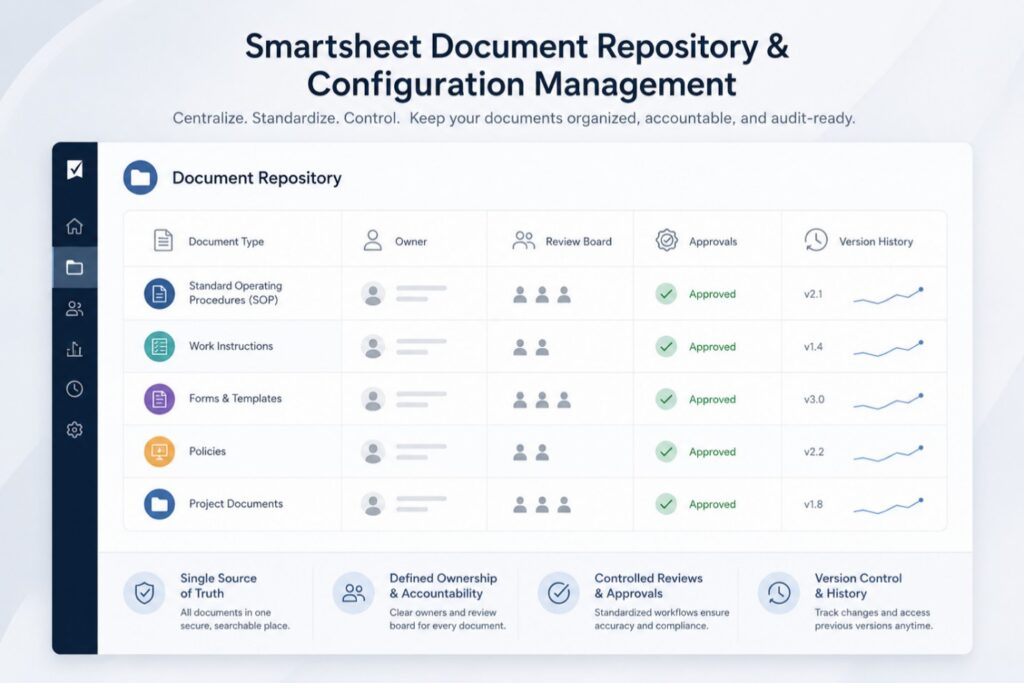
A document repository should retain process and quality-based documents, identify who owns the process, and note who needs to approve document changes. This internal system shows a culture of continual improvement auditors can easily comprehend.
When auditors can easily trace processes, approvals, revisions, and responsibilities, conversations shift away from proving compliance and toward understanding how your organization operates.
Tip #2: Treat Internal Audits Like Real Audits
Many organizations complete internal audits simply to satisfy a requirement.
The most successful organizations use them to identify improvement opportunities before an external auditor ever sees them.
A strong internal audit should:
- Identify genuine nonconformities.
- Investigate root causes.
- Implement corrective actions.
- Validate that corrective actions worked.
Simply documenting findings is not enough.
According to Seni:
“Make sure that after an internal audit or management review, you follow up with the nonconformities and course-correct as you go.”
The real value comes from demonstrating that your organization learns and improves.
“The whole intent of ISO is to ensure continual improvement in managing the quality of your services. So don’t just talk about it. Dig into where the disconnect was, correct it, and validate the corrective action.”
Tip #3: Build an Audit-Day Cheat Sheet
One of the simplest ways to reduce stress on audit day is to prepare a document reference guide before the audit begins.
Once the auditor sends the schedule:
- Review each session and process area.
- Identify documents that may be requested.
- Create quick links or file locations.
- Confirm process owners are available.
Seni recommends creating your own working version of the audit schedule:
“When the auditor provides the schedule, create your own schedule that includes a cheat sheet of what documents may be referenced during that session.”
This approach helps eliminate the frantic search for procedures, records, and policies when questions arise.
As Seni notes:
“This helps you prepare and remember where the documents are filed so you’re not running a scavenger hunt on audit day.”
What Auditors Really Want to See
Many organizations assume auditors are looking for reasons to issue findings.
In reality, auditors are trying to determine whether your processes are effective and consistently followed.
Strong organizations can clearly answer:
- Who owns this process?
- How do you know it’s working?
- How do you measure performance?
- What happens when something goes wrong?
- How do you improve over time?
When those answers are supported by documented evidence, audits become significantly easier.
As Seni summarizes:
“The audit ultimately became less about proving compliance and more about demonstrating that our processes were working as intended and helping our organization achieve its goals of making a positive difference for every customer.”
Final Thoughts
Passing an ISO 9001:2015 audit isn’t about creating the appearance of compliance.
It’s about building systems that work, documenting them consistently, and using findings as opportunities for improvement.
Organizations that maintain clear documentation, engage process owners, conduct meaningful internal audits, and address issues as they arise often discover something surprising:
The audit becomes a confirmation of good practices rather than a stressful event to survive.
Ready for Your Next ISO Audit?
Whether you’re preparing for your first certification audit, addressing findings from a recent assessment, or simply trying to strengthen your Quality Management System, the right preparation can make the difference between a stressful audit and a successful one.
At Alluvionic, we are qualified to help organizations understand ISO 9001:2015, because we’ve done it ourselves. Our team has successfully navigated multiple audits, built and maintained certified quality management systems, and helped organizations turn compliance requirements into sustainable business improvements.
 Our ISO support services include:
- ISO 9001 gap assessments
- Quality Management System (QMS) development
- Documentation and process design
- Internal audit support
- Corrective action support
- Audit readiness reviews
- Surveillance and recertification support
- Ongoing QMS maintenance and improvement
Whether you need help building a quality management system from scratch or fine-tuning an existing one, our team can help you create a practical, sustainable approach that works for your organization.
Don’t wait until audit week to discover gaps. Contact Alluvionic today to learn how our ISO 9001 consulting and implementation services can help you build a stronger quality program, reduce audit risk, and create a culture of continual improvement.
Looking for More Resources?
Explore our expert-curated list of the most Frequently Asked Questions about ISO 9001.