The Department of Defense’s Cybersecurity Maturity Model Certification (CMMC) program is officially underway. Requirements are now appearing in contracts, and the phased rollout is accelerating across the defense industrial base (DIB).
But as implementation ramps up, an article from the Federal News Network explores a 2026 Government Accountability Office (GAO) report that highlights a critical question: Is the ecosystem ready?
Recent findings from the GAO—and new research published by Alluvionic—suggest that the answer may be more complicated than many contractors realize.
The 2026 GAO Report: External Risks to CMMC Implementation
A newly released GAO report warns that the Department of Defense has not fully assessed several “external factors” that could impact the success of the CMMC program. These risks stem largely from the fact that the program depends heavily on the private sector to implement and enforce certification.
Among the most significant concerns:
- Limited assessment capacity
DoD relies on Certified Third-Party Assessment Organizations (C3PAOs) to conduct Level 2 certifications. As of late 2025, only about 92 C3PAOs were authorized, raising concerns about whether the ecosystem can support the volume of companies needing assessments. 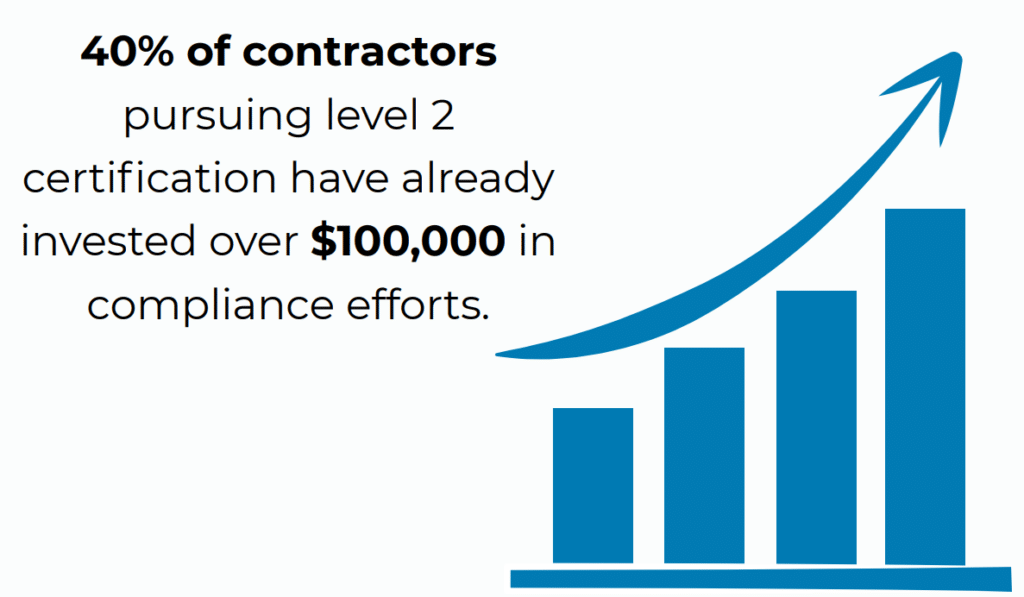 Potential contractor attrition
The GAO also warns that costs and complexity may push some companies—particularly small businesses—out of the defense market if they cannot afford certification.- Reliance on waivers
DoD officials suggested waivers might be used if ecosystem capacity becomes constrained, but the GAO cautioned that relying heavily on waivers could undermine the entire purpose of verifying contractor cybersecurity compliance. - Evolving cybersecurity standards
Another issue is that CMMC requirements currently align with an older version of NIST SP 800-171, even though updated guidance was released in 2024—meaning future program adjustments may require additional changes to training and certification processes. For help demystifying these changes, check out: Before You Rebuild Your CMMC Program for NIST 800-171 Rev. 3, Read This.
Taken together, the GAO’s message is clear: CMMC’s success depends not just on policy, but on the readiness and capacity of the ecosystem implementing it.
What C3PAOs Are Seeing on the Front Lines
Notably, many of the risks identified by the GAO echo what assessors themselves are reporting.
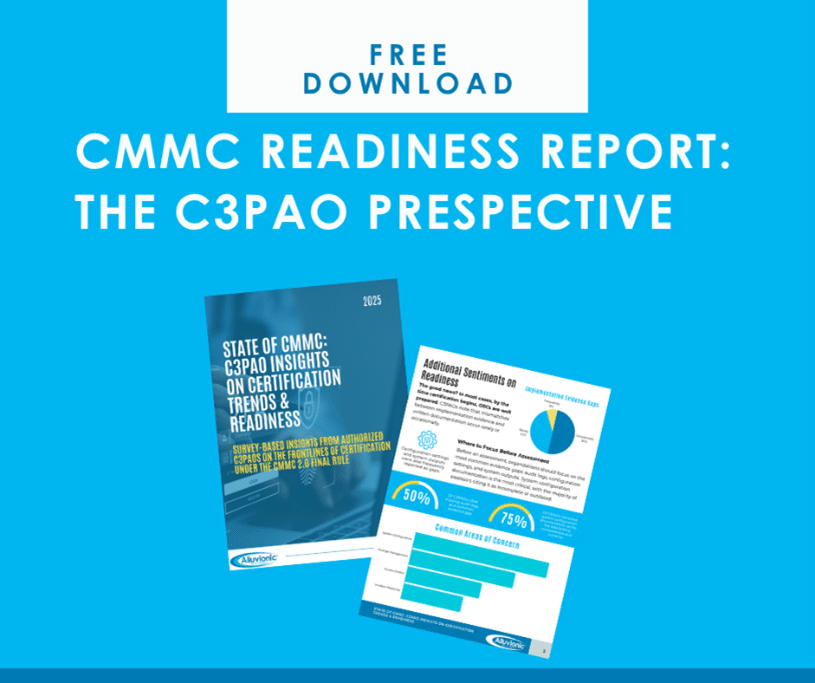 In Alluvionic’s 2025 State of CMMC Report, which surveyed C3PAOs actively performing Level 2 assessments, several trends emerged that reinforce the GAO’s concerns about ecosystem capacity and contractor readiness.
Many organizations aren’t as ready as they think
According to C3PAOs surveyed:
- Only 25% of contractors are typically well prepared when they arrive for an assessment.
- 50% of assessors report delaying or turning away clients roughly half the time due to readiness gaps.
- 80% cite “assumed readiness without validation” as the leading cause of rescheduling.
Common gaps include:
- Incomplete system security plans (SSPs)
- Missing or weak documentation
- Unclear asset scoping
- Inadequate multi-factor authentication
- Poor configuration and audit log evidence
These issues often surface when the assessment process begins—resulting in delays, increased costs, and extended timelines.
Another strain is also showing up in assessor scheduling. As organizations rush to complete certification ahead of anticipated demand, C3PAO calendars are tightening. Mike Crandall, CEO of Digital Beachhead, described the current environment this way: “We’re seeing a rush of organizations seeking formal certification before November, and our calendar is filling quickly for October and November assessments. … There is still time, but it is better to be prepared now.”
The Small Contractor Perspective: Confusion and Cost
The readiness challenge becomes even clearer when looking at small businesses.
In another Alluvionic study—Small Contractors Share Where They Stand on CMMC—survey results revealed that many small defense contractors are still early in their preparation journey.
Key findings include:
- Nearly one-third of contractors don’t know which CMMC level applies to them.
- Many organizations report confusion about requirements and implementation timelines.
- Cost and complexity remain major barriers, especially for Level 2 compliance.

Some respondents even reported losing contract opportunities due to delayed preparation or uncertainty around compliance.
This aligns closely with the GAO’s warning that CMMC costs could discourage some companies from continuing to do business with the DoD.
A Perfect Storm: Demand vs. Ecosystem Capacity
When the GAO’s concerns and industry survey data are viewed together, a pattern emerges.
Three pressures are converging:
- High demand for CMMC certification
- Limited assessor capacity
- Widespread contractor readiness gaps
Even now, many C3PAOs report that assessments are booking months in advance—and that demand is likely to outpace supply as the phased rollout progresses.
This creates a potential bottleneck across the defense industrial base.
Companies that wait too long may find themselves competing for limited assessment slots just as CMMC requirements become mandatory in new solicitations.
What Contractors Should Do Now
The takeaway from both the GAO report and industry data is straightforward:
Preparation can’t wait for the contract requirement.
Organizations that succeed in the CMMC era will focus on three priorities:
- Validate readiness early
Conduct a gap assessment or mock audit before scheduling certification. - Strengthen documentation
Most delays occur not because controls aren’t implemented—but because evidence isn’t documented. - Plan for assessment timelines
Given the limited number of available C3PAOs, organizations should plan ahead and schedule early.
Erik Winkler, head of the federal team at ControlCase, a C3PAO, commented on today’s assessment scheduling environment.
“Our current scheduling timeline for Level 2 assessments is approximately four to five months, and that window continues to grow as more companies get in line for their CMMC assessment.”
The Bottom Line
The GAO report underscores a reality that many in the defense cybersecurity community already understand. CMMC is moving into a critical phase, and successful implementation will depend on the preparedness of the entire ecosystem.
That includes:
- Assessors
- Consultants
- Small businesses
- Prime contractors
- The DoD itself
The next phase of CMMC will evaluate cybersecurity maturity across the defense supply chain while also showing whether the ecosystem is prepared to meet rising demand at scale.
For contractors, the message is direct. Begin preparing now, before CMMC requirements appear in a contract.