



Managed service providers (MSPs) are often the first call when a client has a cybersecurity compliance question. A defense contractor says it needs CMMC Level 2. A software client asks whether its environment is ready for SOC 2. A healthcare customer wants to know whether the technology its MSP manages supports its HIPAA requirements.
MSPs know their clients’ systems, users and technology better than most outside organizations.
And as cybersecurity requirements continue to evolve, MSPs can extend their capabilities through trusted compliance expertise while staying focused on what they do best.
Rather than guess what MSPs want to know, Alluvionic asked them directly.
Alluvionic and ControlCase recently hosted a Cybersecurity Compliance Ask Me Anything focused on questions facing MSPs.
Compliance experts included:
- Elizabeth Huy, EVP of Commercial Services at Alluvionic
- David Sullivan, Cybersecurity and IT Operations Manager and CMMC Certified Assessor at Alluvionic
- Eric Levitas, VP of Business Development at ControlCase
Dave Sullivan
Alluvionic
Cybersecurity & IT Operations manager
CMMC Certified Assessor / compliance leader with experience in readiness assessments, secure enclaves, GCC High, and compliance modernization.
Elizabeth Huy
Alluvionic
EVP of Commercial Services
Leads cybersecurity, project management and process improvement services. Cyber-AB Registered Practitioner and PMP.
Eric Levitas
ControlCase
VP of Business Development, Federal
10+ years serving government contractors. Focuses on CMMC and FedRAMP markets and cyber business growth.
Instead of a traditional presentation, MSP owners brought the compliance questions they were hearing from real clients.
Here is what they asked.
When a Client Says It Needs CMMC, Start with the Contract Requirement
A client saying, “We need CMMC,” does not tell you exactly what it needs to do.
It may have a specific contractual requirement. A prime contractor may be asking for a particular level of compliance. Or the client may have misunderstood what is actually required.
During the AMA, Levitas emphasized starting with the source:
“Show me the language of the contract of what they’re asking.”
Huy shared an example of a subcontractor that believed it needed CMMC Level 2. Once the requirements were reviewed, the company learned that its CMMC requirement was actually Level 1. That significantly changed the work ahead.
Before recommending a new enclave, GCC High migration or major security investment, first determine:
- What requirement is driving the request?
- What information does the client handle?
- Which systems and users are affected?
- What assessment or evidence is actually required?
The takeaway for MSPs: understand the requirement before designing the solution.
The CMMC Pause Does Not Mean Defense Clients Can Stop Preparing
CMMC was one of the biggest topics in the discussion because of uncertainty around the Phase II pause.
The speakers stressed that MSPs should help clients separate what changed from what did not.
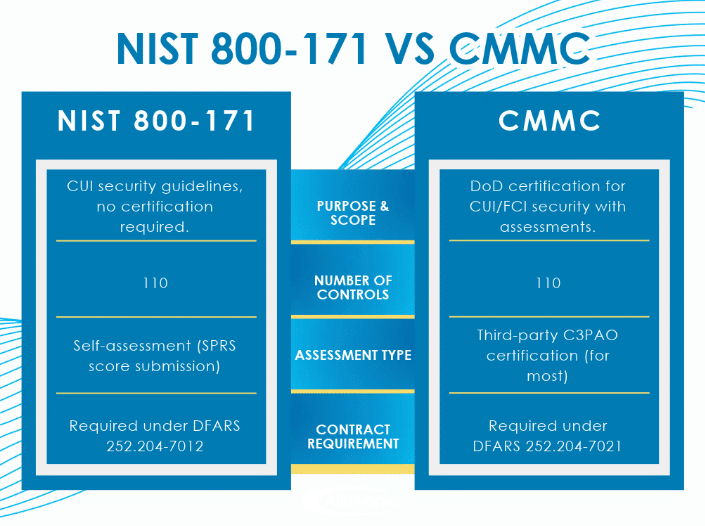
Sullivan explained that while third-party certification requirements had been paused, applicable NIST SP 800-171 requirements and Phase I activities had not simply disappeared. He also said prime contractors were continuing to ask subcontractors about SPRS scores, POA&Ms and plans for addressing gaps.
For MSPs, the practical lesson is simple:
Do not tell a defense client that CMMC no longer matters because of the pause.
Instead, determine what its current contract and customers actually require.
If You Support a Client’s CMMC Environment, Define What Your MSP Owns
One MSP concern was where the client’s responsibility ends and the MSP’s begins.
That delineation is vital, because an MSP may manage systems, security tools or technical functions that support a client’s CMMC requirements.
Sullivan recommended clearly documenting responsibilities through a shared responsibility matrix and statement of work. That should identify what the MSP handles and what remains the client’s responsibility.
Depending on the environment, that might include areas such as identity management, endpoint configuration, logging, backups, network security or cloud administration.
The important part is clarity.
Neither side should assume the other is handling a requirement that has never been assigned.
| If your client... | You may hear about... |
|---|---|
| Works in the defense industrial base | CMMC / NIST SP 800-171 |
| Provides software or technology services | SOC 2 |
| Works in healthcare | HIPAA |
| Has international or enterprise customers | ISO 27001 |
| Processes payment cards | PCI DSS |
| Wants a structured cybersecurity framework | NIST Cybersecurity Framework |
Levitas encouraged MSPs to look for these signals across their existing client base. A customer may already be receiving security questionnaires, contract requirements or certification requests without having brought its MSP into the conversation yet.
Useful questions for client reviews include:
- Are customers asking you to demonstrate your cybersecurity practices?
- Have you received security questionnaires or certification requests?
- Are new cybersecurity requirements appearing in your contracts?
- Are you pursuing government, healthcare, enterprise or international work?
These questions can uncover compliance needs before they become urgent.
Be Careful About Supporting a Client’s NIST SP 800-171 Score in SPRS
Another MSP owner asked about risk when clients report their cybersecurity posture to the government.
For defense contractors, that can include a NIST SP 800-171 assessment score submitted to the Supplier Performance Risk System, or SPRS.
Levitas described encountering an organization that had reported a perfect score even though it had not completed the work.
His response:
A target score is not the same as the organization’s current score.
Sullivan also cautioned MSPs against affirming a client’s assessment results without understanding how they were determined. He recommended maintaining evidence for the areas the MSP actually supports and clearly documenting those responsibilities.
For MSPs, the rule is straightforward:
Only support compliance claims you can actually substantiate.
CMMC Assessors Need Evidence, Not Just a Correct Configuration
MSPs may configure the technology correctly and still find that the client needs more for an assessment.
Sullivan described two concepts that matter during CMMC assessments:
Adequacy: Is it the right evidence?
Sufficiency: Is there enough evidence?
For example, one screenshot may show that a security setting is configured on one server. If the requirement applies across several systems, that may not be enough to prove the control is implemented throughout the environment.
For MSPs, the question becomes:
Can we prove the requirement is implemented everywhere it applies?
That is different from simply knowing the technology is configured.
CMMC Scoping Starts with Understanding Where CUI Goes
Another challenge raised during the discussion was determining what actually belongs inside the CMMC environment.
Sullivan described the complexity of following Controlled Unclassified Information, or CUI, through a client’s systems:
Where is it stored? Who accesses it? What cloud systems touch it? What systems protect it? What information is actually CUI?
Those answers can dramatically change the size and complexity of a CMMC project.
This is one place where MSPs can add significant value because they understand how the client’s technology actually fits together.
The compliance expert understands the requirement.
The MSP understands the environment.
MSPs Do Not Need to Become Experts in Every Compliance Framework
One of the most useful takeaways from the AMA was also one of the most reassuring.
Even people who work in compliance every day rely on specialists.
During the discussion of POA&Ms, Levitas acknowledged that there are technical areas where he relies on certified practitioners and assessors with deeper expertise.
MSPs can take the same approach.
You should know enough to:
- Recognize when a client has a compliance requirement.
- Understand how that requirement may affect the technology you manage.
- Clearly define what your team owns.
- Provide evidence for the work you perform.
- Know when to bring in deeper compliance expertise.
The goal is not to memorize every change to CMMC, SOC 2, ISO 27001, HIPAA, PCI or every other framework your clients may encounter.
It is to make sure that when a client asks for help, you know what to ask next and where to find the right answer.
See MSP Compliance Support in Action
For MSPs ready to explore what this looks like in practice, read how one MSP helped clients achieve CMMC Level 2, including lessons on scoping, assessment preparation and the cost of supporting compliance.