
Why Leaders Need to Tell the Stories They Almost Kept to Themselves
Leadership content is everywhere. Scroll LinkedIn for five minutes and you will find advice on resilience, culture, delegation, succession planning, trust, communication, and growth. Most of it is sound advice, but much of it has one problem: it stays abstract.
Abstract advice may be easy to agree with, but it is harder to remember, act on and believe when the stakes are real. What stays with people is something else. It is the story that gives those ideas shape, stakes, and human weight.
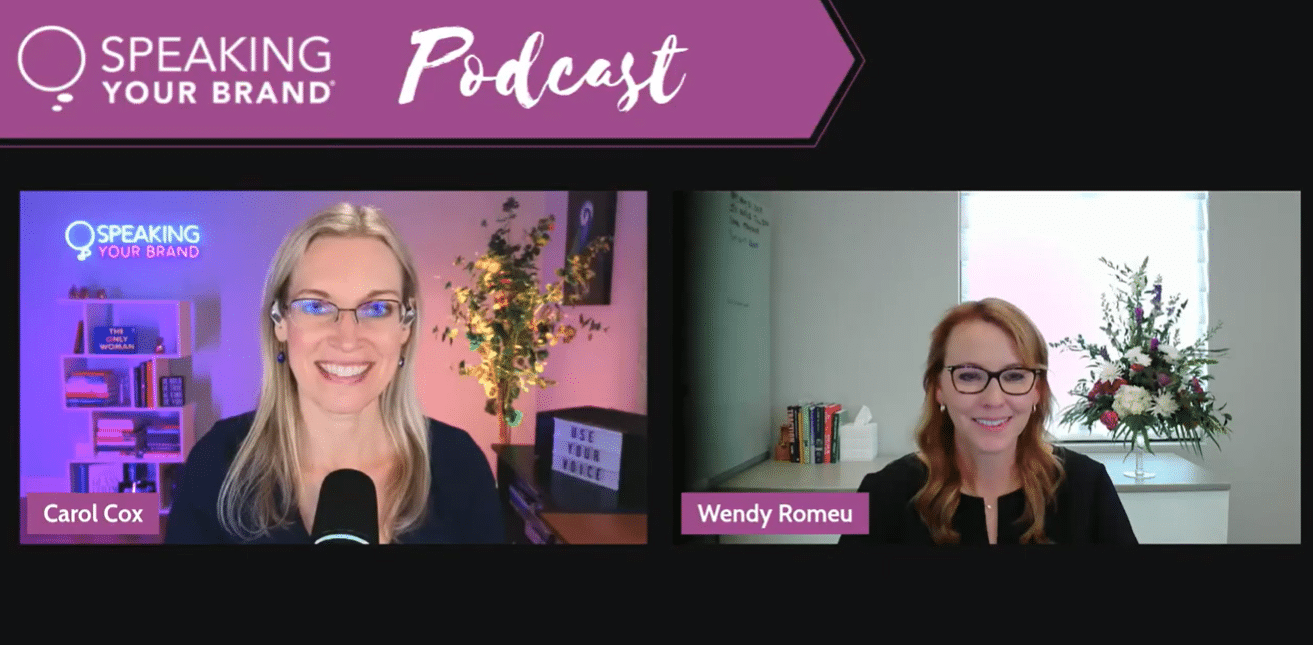
That is part of what makes Wendy Romeu’s recent appearance on the Speaking Your Brand podcast so resonant. The episode begins with Carol Cox describing Wendy as “the messenger your audience is waiting for,” which turns out to be more than a strong introduction. It captures the shape of the whole conversation. Wendy shared a story that had already begun pressing outward, a story rooted in a painful family crisis and in the strength of a company that had to keep moving while its leader stepped away without warning. The story is personal, but the lesson does not stay personal for long. It reaches anyone who leads people, carries responsibility, or has learned something through experience that could steady someone else.
The Story Wendy Chose to Share
The story at the center of the podcast is deeply personal. During a family vacation in Puerto Rico, Wendy’s husband suffered a devastating paramotoring accident that left him paralyzed. In the middle of that crisis, Wendy had to step away from Alluvionic almost immediately, while her team carried the company forward, absorbed the shock of her absence, and continued serving customers. She later explained that she had no advance warning and no chance to prepare in the moment. The preparation had already happened in the years before, in the way the company was built, the way decisions were distributed, and the way people had learned to lead.
That background gives the podcast its emotional force, but the conversation is about more than a single event. Carol set the discussion up as an exploration of a larger set of questions: how leaders know when it is time to tell a difficult story, how that story becomes useful to an audience, and how the process of sharing it can clarify the lesson for the person telling it. Wendy’s experience gave those questions real depth because the story was not hypothetical. It had already tested her, her team, and the systems she had put in place long before the crisis arrived.
Why Real Stories Reach People
One of the most useful parts of the episode comes when Wendy and Carol talk about detail. Wendy says she came to see that sharing more of the specifics helped people understand that “this really happened.” Carol takes that thought further and gives it language that is hard to forget: “the details are what makes it a story.” She explains that once listeners hear the details, they begin placing themselves inside the experience. They start wondering what they would have done, how their team would have responded, and what their own organization would have revealed under that kind of pressure.
That insight reaches far beyond this one podcast appearance. People absorb lessons more deeply when they can see the sequence, the pressure, and the choices inside a real experience. They remember stories because stories allow them to test their own assumptions. Leaders at every level do that instinctively. A CEO may listen and think about succession, delegation, or operational continuity. A department lead may think about how decisions flow when the usual point of contact is suddenly unavailable. An employee with growing responsibility may hear the same story and recognize that leadership begins long before a title catches up with it. The value of the story comes from that movement in the listener. It sharpens attention and makes the lesson usable.
The Moment a Story Asks for a Wider Audience
Wendy describes the turning point with unusual clarity. Carol had reached out to ask whether the experience was ready to become a talk. Around the same time, someone else asked Wendy if she wanted to speak. Her response was immediate: “it must be a sign. It’s time.” This line lands because it reflects something many leaders recognize in their own lives. Some work begins as a decision. Other work begins as a conviction that keeps returning until it becomes difficult to ignore.
This story seems to belong to the second category. It had already been lived, written about, and carried privately. By the time those invitations arrived, the message had gathered enough force that Wendy could feel where it wanted to go. She says in the podcast that there was “a big message here” because many leaders assume they will have time to tidy things up before a disruption arrives. Her experience made that assumption impossible to hold onto. She knew what it was to leave abruptly, to rely on what had already been built, and to watch a team carry real responsibility. Sharing the story gave that lesson a public form.
Many leaders know this experience well. Some stories, even the ones the teller would prefer to keep private, seem destined for a wider audience in a way that becomes impossible to ignore.

Leadership Beyond the Org Chart
The podcast supports a broader reading of leadership all the way through. Carol frames the episode for listeners across contexts, from solo business owners to those growing teams, and Wendy herself closes with a message that extends well beyond executives. “You have a voice and you have a message and you have a story to tell and people need to hear it,” she says. The power of that line is its range. It speaks to founders and presidents, but it also speaks to team leads, project managers, mentors, and emerging leaders who may not think of their experience as public material yet.
That broader audience belongs in the center of this conversation, not at the edge of it. Organizations grow stronger when leadership is shared, practiced, and recognized in many places. The same is true of storytelling. A company’s public voice does not come only from the person at the top. It grows richer when people across the organization learn to name what they have seen, what they have learned, and what others could use. Wendy’s story makes that point implicitly because her own leadership depended on people all around her stepping into responsibility. Her later reflection deepens it. She says that telling the story gave her time to reflect on how remarkable her team had been and how proud she was of what they carried together.
Giving the Story Shape
Another reason the episode works so well is that it treats storytelling as serious work. Wendy did not simply decide to tell the story and step in front of an audience. She talks about preparing for the speaking engagement, working through structure, deciding what to include, and finding a sequence that would help people remember both the experience and the lesson inside it. Carol notes that the story was “the heart” of the talk and that the audience also received “tangible, real world takeaways.”
That approach offers a useful model for anyone who carries a meaningful story. Experience alone is powerful, but experience shaped with care reaches further. It allows an audience to stay with the emotional truth of what happened while also coming away with something they can apply. That balance is part of what makes a story travel well inside a company, across an industry, or into a wider leadership conversation. It respects the audience. It gives them substance. It invites them to think with greater honesty about their own work and their own readiness.
When the Story Finds Its Audience
By the end of the podcast, Wendy is clear about what telling the story has given her. She says she needs to “get this message out” because there are not enough stories like this from real people. Carol answers with a line that brings the episode back to its opening note: “you are the messenger your audience is waiting for.” Together, those comments express something larger than one speaking engagement. They point to the responsibility leaders sometimes feel when experience has given them a lesson that others could use.
That responsibility does not belong only to CEOs. It belongs to anyone whose experience could make another person more thoughtful, more prepared, or more courageous in the way they lead. Some stories arrive with that kind of weight. They gather meaning over time. They ask for structure, clarity, and the right audience. Eventually they reach a point where keeping them private feels smaller than their purpose.
Wendy’s podcast appearance leaves that impression. It offers a story rooted in hardship, trust, preparation, and shared leadership. It also offers a generous invitation. When a story keeps calling to you, listen. Give it honest words, and let it reach the people who need it.
Listen to the Full Conversation
Listen to Wendy Romeu’s conversation on the Speaking Your Brand podcast to hear the full story, the moment she knew it was time to tell it, and the message she hopes leaders at every level will carry forward.